
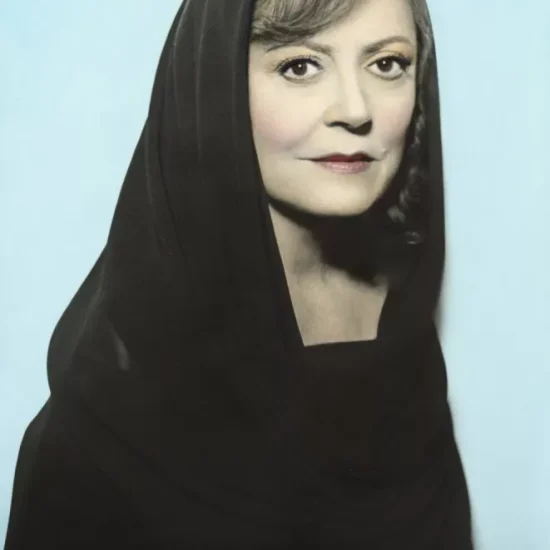
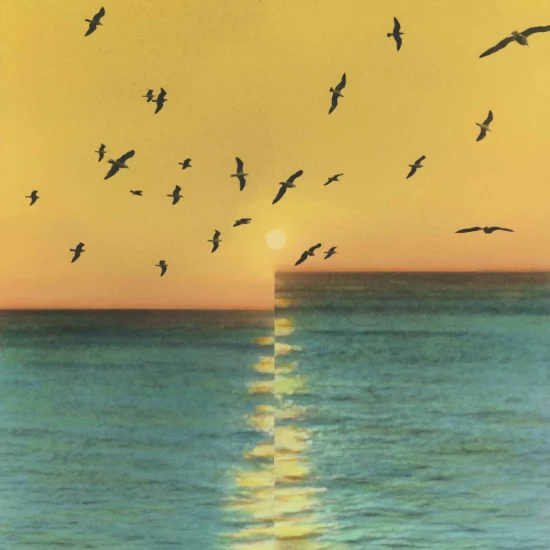
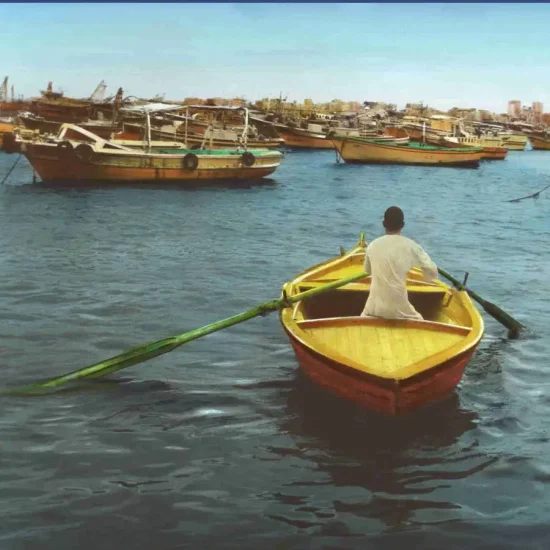
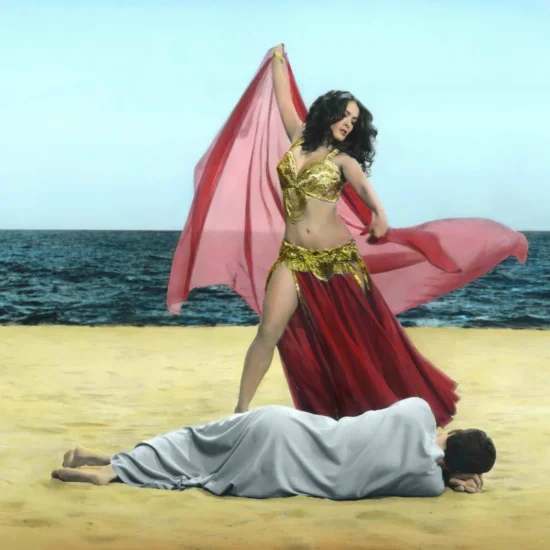
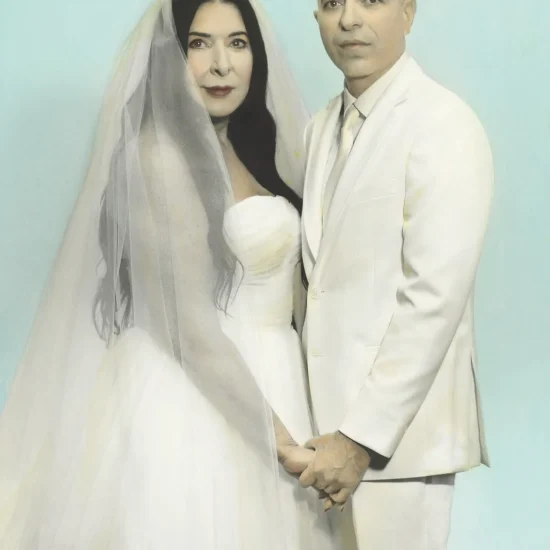
Youssef Nabil has always made images that seem to have arrived from a film we have half-forgotten: glamorous, bruised, a little untimely. In To Dream Again at the Musée d’Orsay, that feeling becomes almost architectural. His hand-coloured photographs and videos are installed amid the museum’s Orientalist galleries—spaces already dense with projections of elsewhere, with Europe’s fantasies of the Arab world—and the encounter is as seductive as it is uneasy.
Nabil’s pictures are not interested in the clean, cool realism associated with contemporary photography. They are lush, deliberately artificial and slow-burning. Faces are softened by colour; skies are implausibly blue; interiors glow with the faded promise of old studio cinema. He works with an analogue sensibility that feels less nostalgic than strategic. The hand-colouring turns a photograph into an object with a pulse, insisting that every image is made, retouched, dressed.
That last word matters. Nabil understands clothing and pose as tools of fiction. His figures are often positioned at a remove—seen from behind, caught in a doorway, reclining against a landscape too perfect to be trusted. They wear the air of people who have chosen their exit before entering the frame. The result is a kind of controlled glamour: not the loud glamour of celebrity, but the private glamour of someone alone with a mirror.
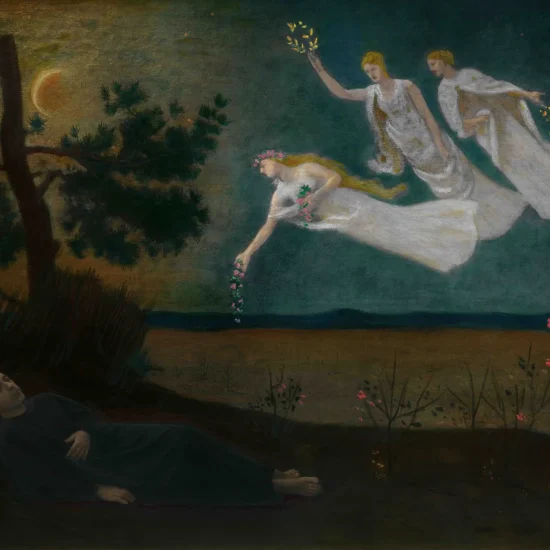
At Orsay, these images meet their historical ancestors with a faintly dangerous intimacy. The museum’s Orientalist paintings were constructed through distance: the imagined East as spectacle, ornament, sensual release. Nabil does not simply reject that visual inheritance; he inhabits it, reframes it, and makes its mechanisms visible. As a Franco-Egyptian artist, he knows the charge of these images from more than one direction. His work borrows their saturated theatricality while refusing their certainty.
The show’s most compelling proposition is that fantasy is never innocent, but neither is it disposable. Nabil’s dream-world does not offer an uncomplicated return to a golden age of Egyptian cinema or Mediterranean romance. It is populated by longing, migration, grief and self-invention. His hand-coloured surfaces are beautiful precisely because they acknowledge the labour behind beauty: the correction, the embellishment, the need to make a life look survivable.
This makes the exhibition feel unexpectedly contemporary. We live in a moment of relentlessly frictionless image production, where faces are edited before they are seen and nostalgia is a preset. Nabil’s photographs resist that speed. Their colour appears to have been breathed onto the print rather than applied to it. They ask the viewer to notice the difference between a perfect image and an image that has been cared for. In a culture obsessed with authenticity, he makes a convincing case for artifice as a more honest emotional language.
There is also a delicious tension in seeing this work at the Musée d’Orsay, an institution whose grandeur can easily overwhelm anything placed inside it. Nabil holds his own by declining to compete with the rooms’ historical scale. Instead, he turns intimacy into a form of resistance. His self-portraits, especially, have the quiet force of someone re-entering a room that was never designed for them and deciding to rearrange the lighting.
If there is a limitation, it is also part of the show’s fascination: the conversation with Orientalism can occasionally feel so aesthetically seamless that its critique risks becoming too elegant. But Nabil’s work is most powerful exactly at that threshold. He does not stand outside the fantasy and lecture it. He slips inside, changes clothes, and leaves it looking slightly less certain of itself.
To Dream Again is a show about cinema, memory and the politics of looking. More than that, it is about the strange freedom of becoming an image on your own terms.