
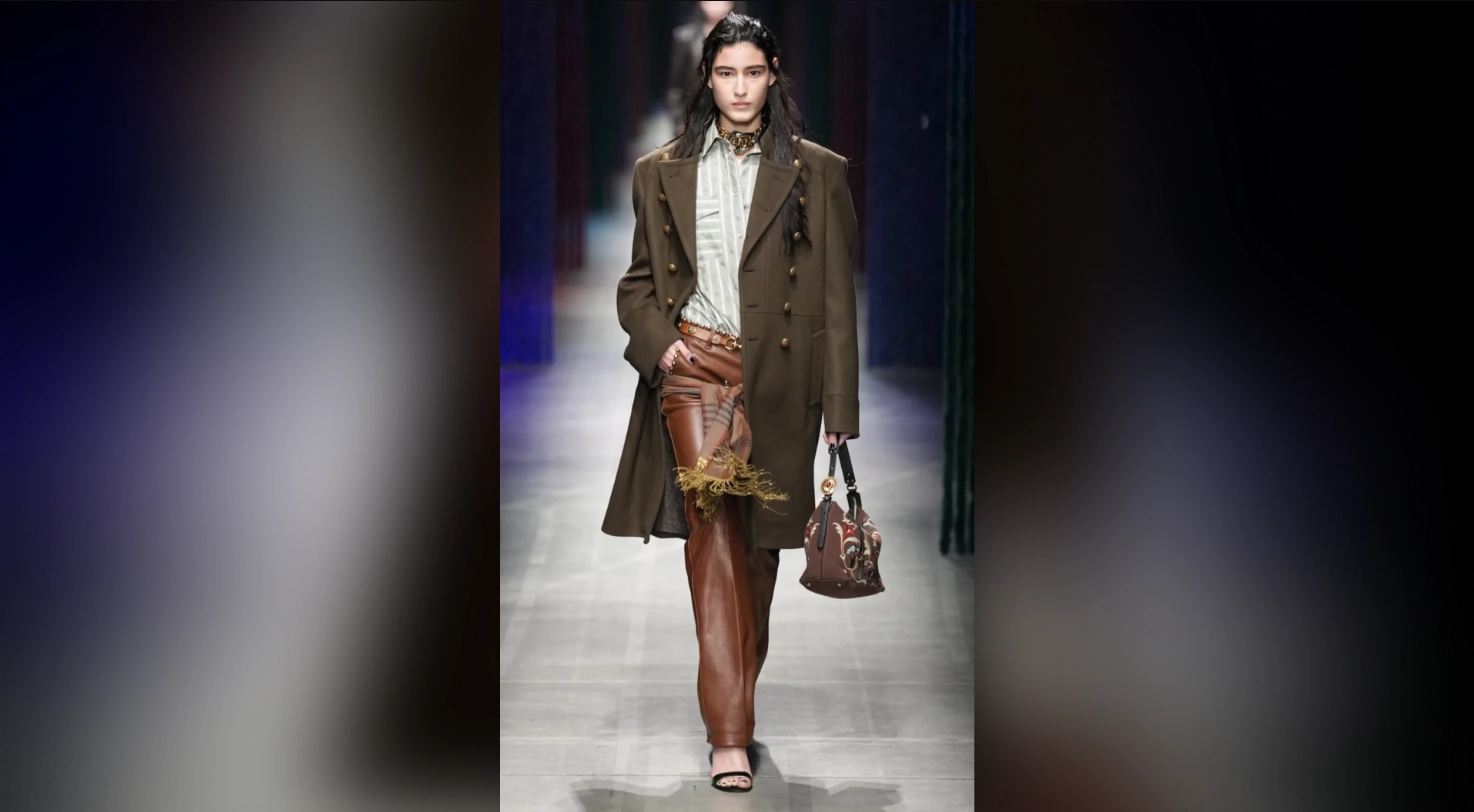
Etro Fall 2026
Marco De Vincenzo loves a metaphor. Like, really loves one. This season he described the collection as a wave—between rigor and explosion, control and abandon, sharp lines and total release. Which feels right, because watching Etro right now feels a bit like watching something inhale… and then completely lose its mind. “Its bohemian side resurfaces,” he said, “hyper-colored, maximalist, a little mad.” And yes. Mad, but in that intentional, self-aware way. In De Vincenzo’s telling, Etro is basically an ouroboros—a decorative universe endlessly feeding on itself, regenerating, looping back, never getting bored. Somehow neither do we.
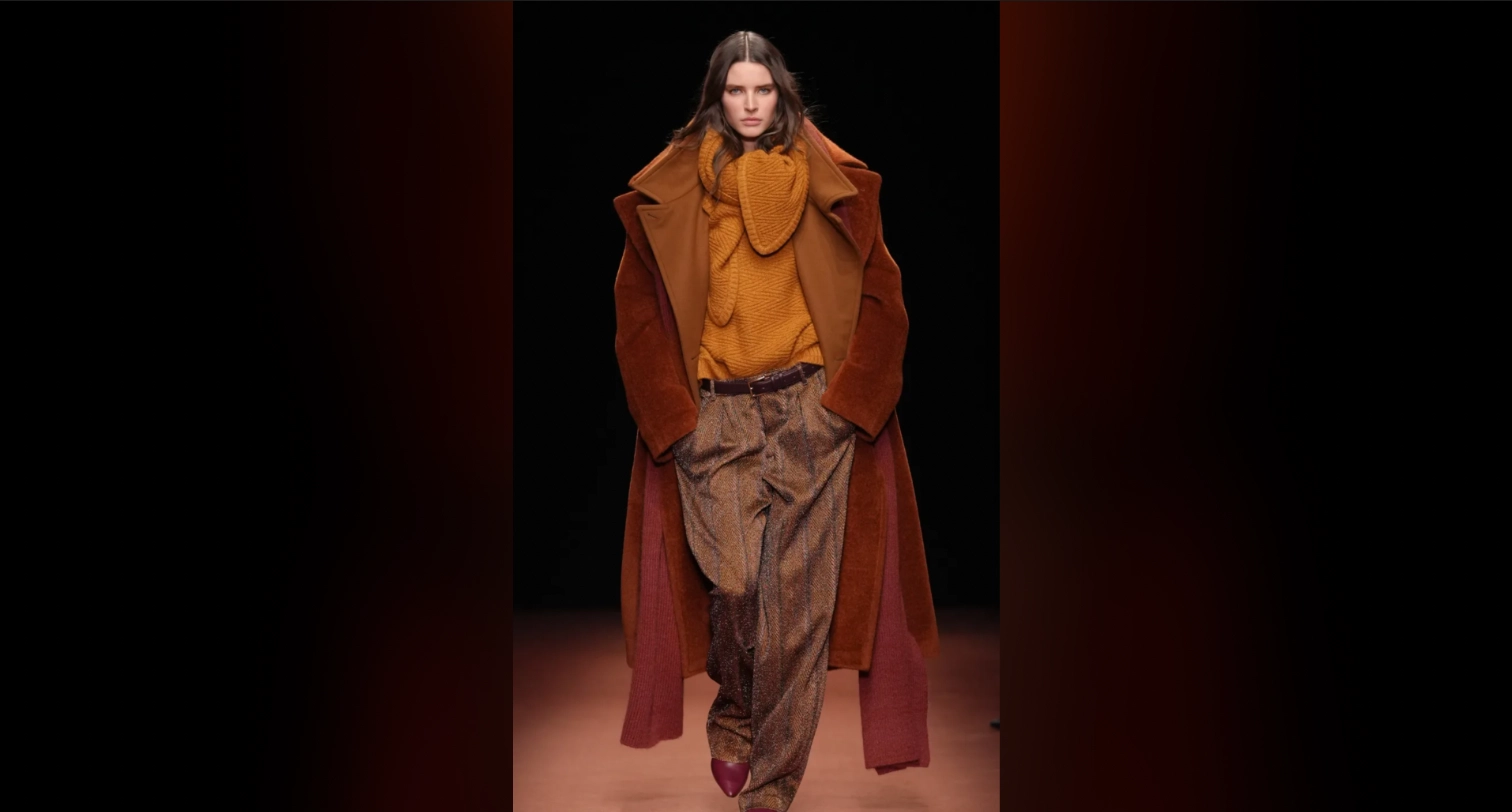
Missoni Fall 2026
Alberto Caliri’s time at Missoni feels less like a series of hard resets and more like one long, ongoing sentence. Each show picks up exactly where the last one left off—no plot twists, no dramatic pivots, just a few carefully chosen additions that quietly make the whole thing richer. “This show starts where the previous one left off,” he said, plainly. “I’m partial to consistency.” Which, in a fashion landscape addicted to whiplash, feels almost radical.
Caliri knows the Missoni archives like muscle memory. After years inside the house, he doesn’t treat its history like something fragile or sacred—more like something lived-in. He opens drawers confidently. Pulls references without dusting them off too much. Less archivist, more trusted insider who knows exactly what still works and what doesn’t need explaining.
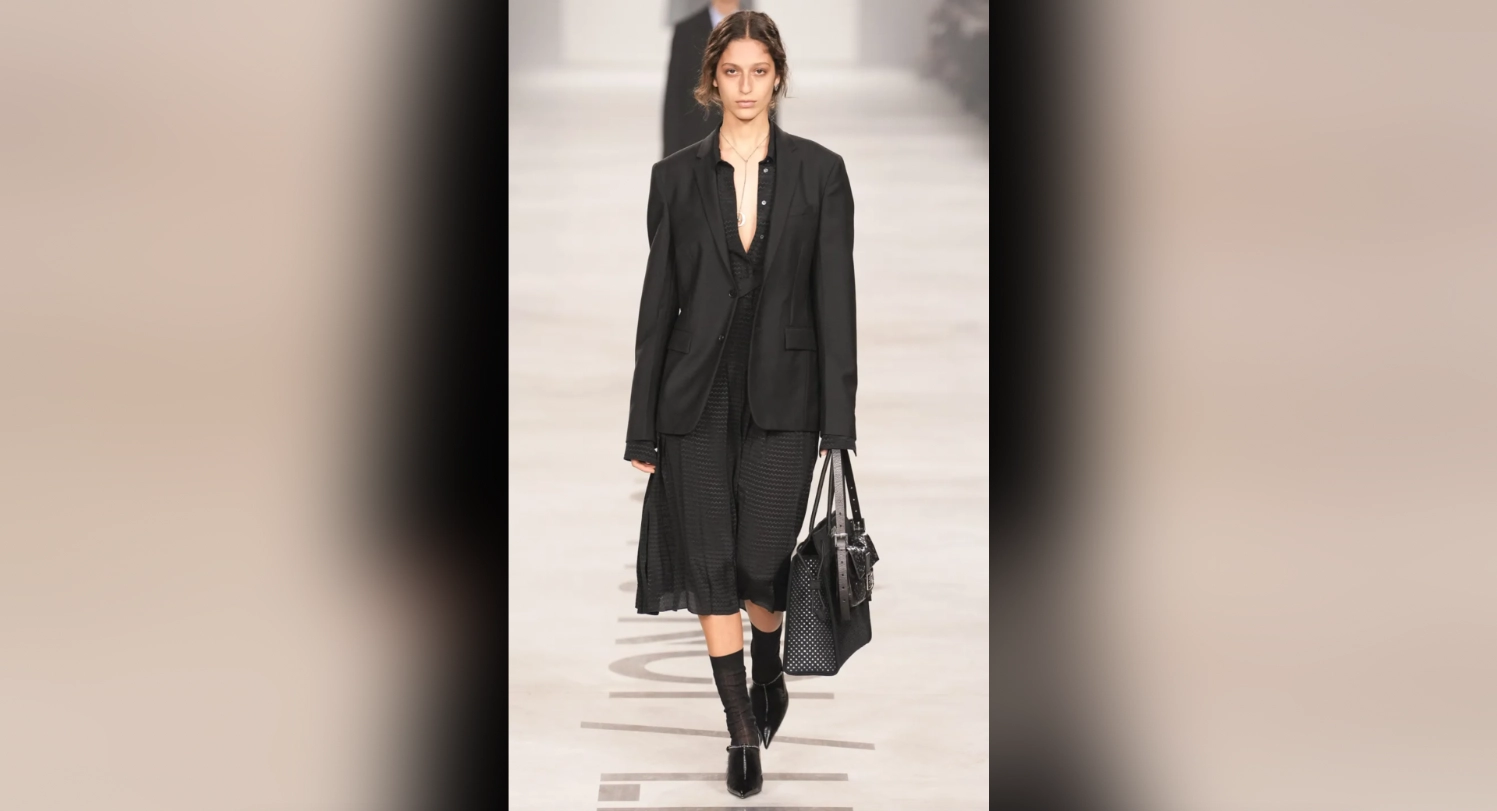
Fendi Fall 2026
“Less I, More Us.” The phrase was stenciled right there on the runway, and echoed again on the webbing of bags—like a mantra you were meant to absorb whether you wanted to or not. And sure, on the surface, Maria Grazia Chiuri’s debut as chief creative officer at Fendi was very much about togetherness. Collaboration. Pluralism. Shared language. But let’s be real for a second: this was also unmistakably a Chiuri show. Calm, controlled, intentional. Less ego on display, maybe—but a very clear hand on the wheel.
Before the show, she kept talking about silhouette. Shape. Structure. And by the time she took her bow, it was obvious she wasn’t just redrawing the outline of the clothes—she was quietly redrawing the outline of Fendi itself.
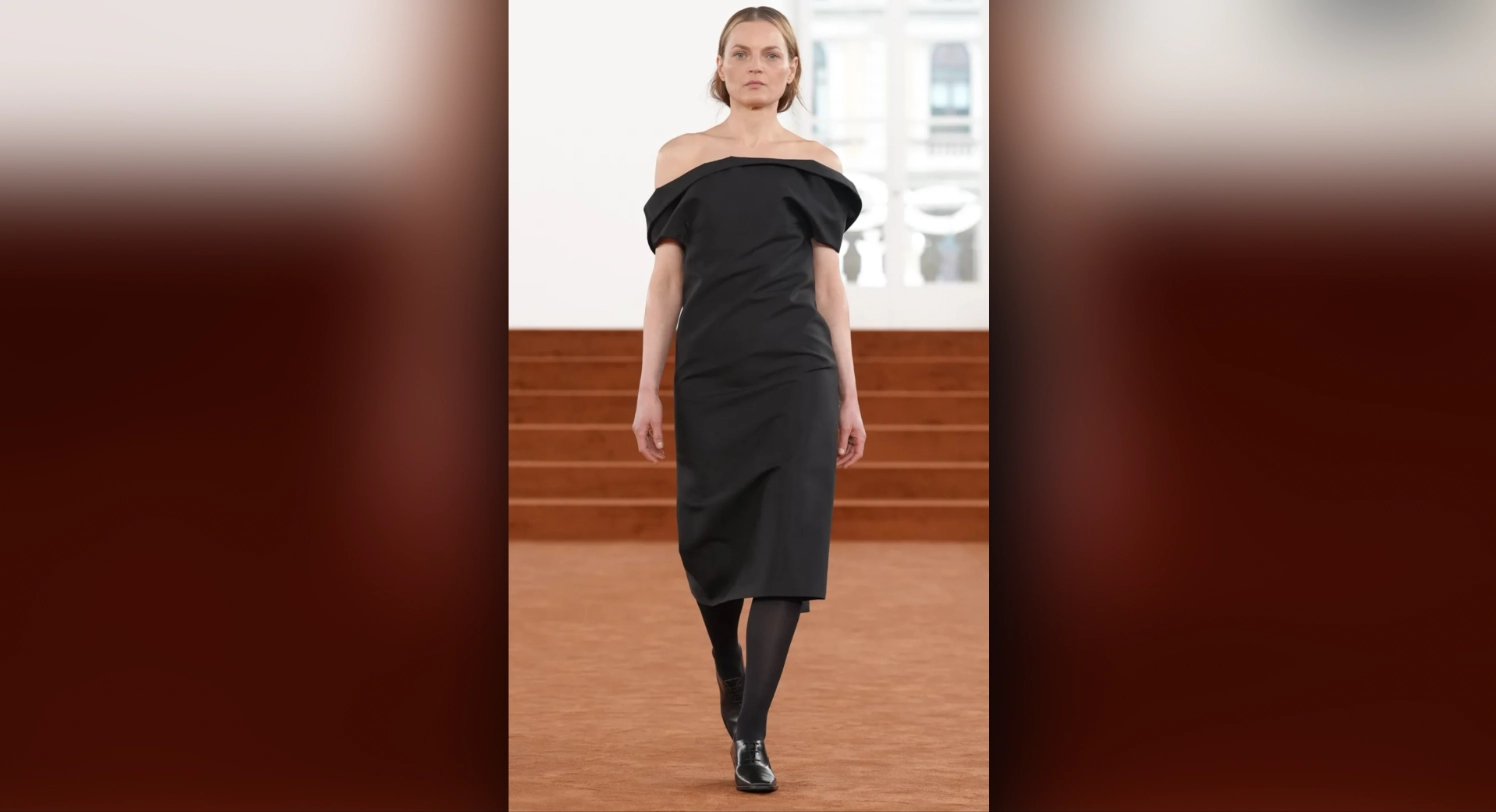
Jil Sander Fall 2026
For his first outing at Jil Sander last season, Simone Bellotti was in full reduction mode. Strip it back. Pare it down. Get obsessed with line. “Very straight, very clean, removing fabric,” he said at the time. This season? He did the opposite. And not in a chaotic way—in a deliberate, almost teasing way. Ruffles snaked down the sides of trousers. Coats were slashed high up the back. Skirts were split open at the seams just enough to flash a white-stockinged thigh. He put it plainly: “Can something superfluous be considered essential?” And in his hands, the answer is… absolutely yes.
Bellotti comes from menswear, which means tailoring is his native language—and nuance is his obsession. This season, he’d been deep in the black-and-white photographs of Anders Petersen, specifically his images of Café Lehmitz, a bar in Hamburg’s red-light district in the late 1960s. The thing that stuck with him wasn’t grime or decadence so much as intimacy. Bodies close. Clothes slipping. That slightly off-kilter feeling when nothing is quite sitting where it’s supposed to. “Some suits come up wrong,” he said. “The collar looks like it’s falling in the back. The shoulders on a dress are detached from the body.” Clothes, basically, that want to escape.
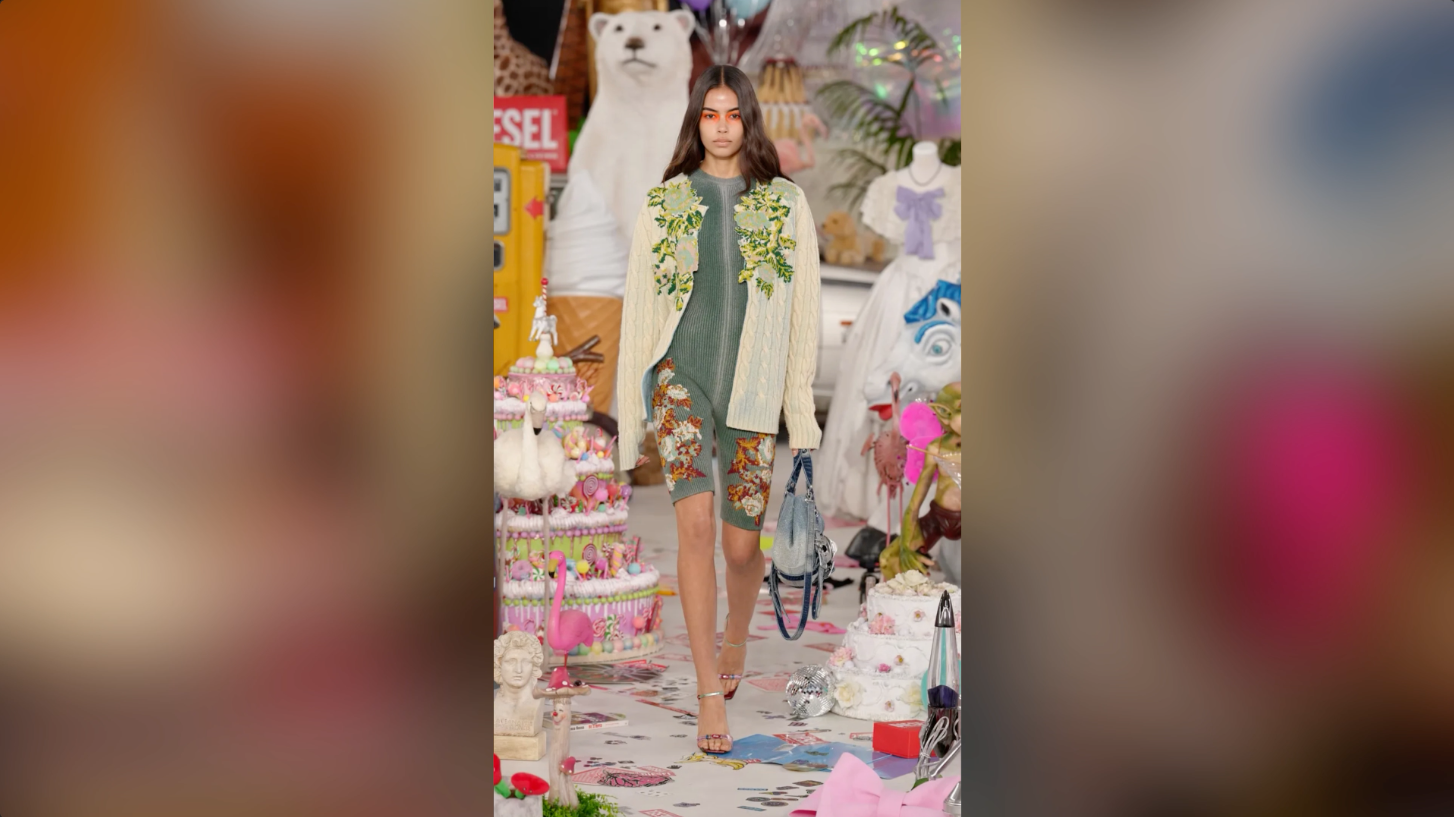
Diesel Fall 2026
“Dirty stop out” is one of those very British phrases that somehow manages to be both judgmental and affectionate at the same time. You had such a good night you simply… didn’t go home. Morning arrives. Reality hits. “Walk of shame” is what we call the aftermath. Glenn Martens, standing firmly in Diesel-land this afternoon, looked at the brand’s long-running slogan—For Successful Living—and decided it was time to rehab the entire post–all-nighter wardrobe. Honestly? About time.
Speaking before the show, Martens laid it out plainly. You wake up somewhere unfamiliar. No mirror. No plan. You throw something—anything—on and bolt. “Everything is messed up,” he said. But here’s the twist: once you hit the street, you look hot as fuck. Because you own it. You had a great night. You’re glowing from the inside. And suddenly the mess is the point.
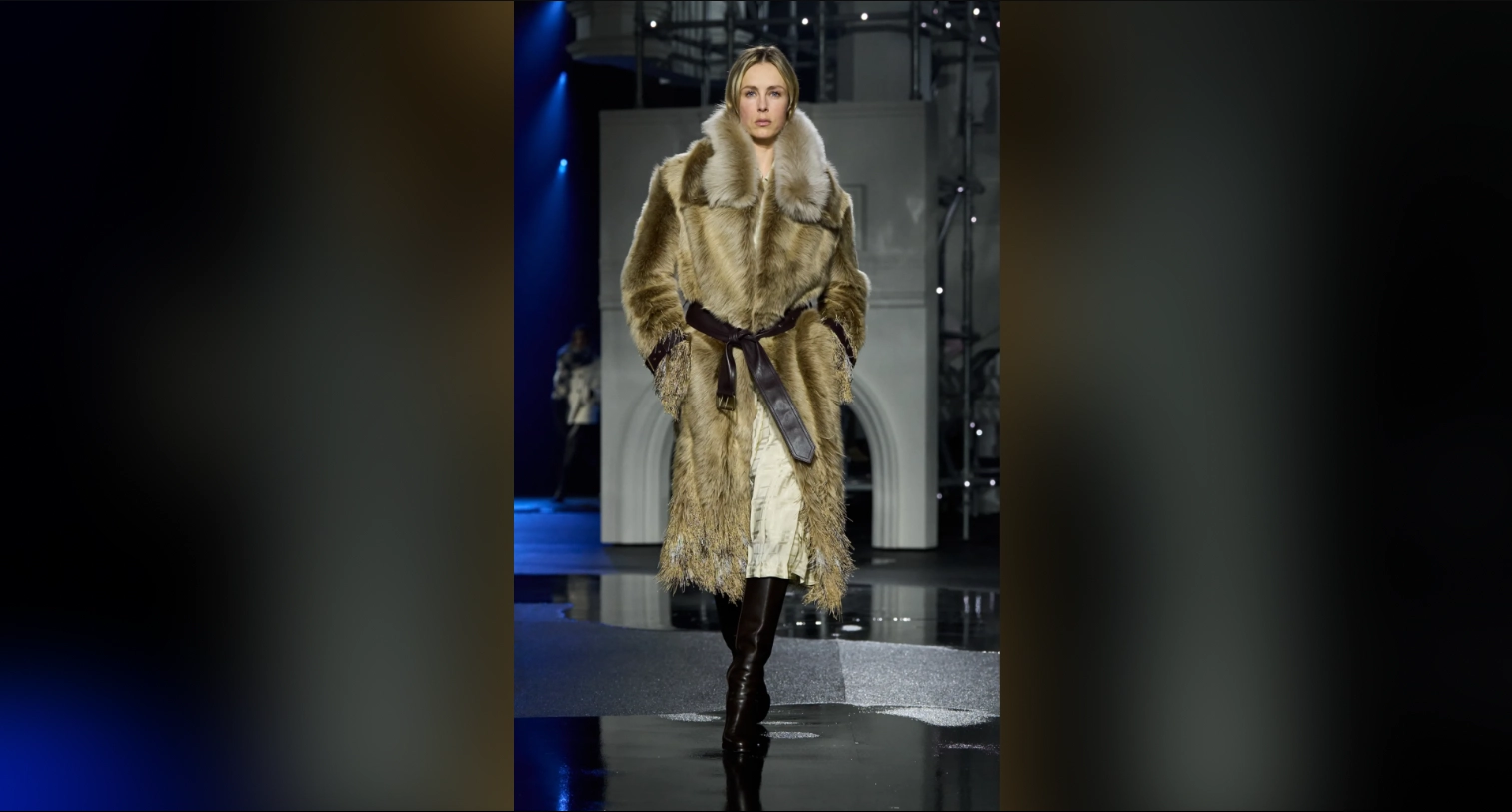
Burberry Fall 2026
Last season it was all midsummer fields and festival mud and that very pastoral idea of Britain. This season? Daniel Lee yanked Burberry straight into midwinter, after-dark London. Cold air. Glossy streets. The kind of night where everything feels a little sharper. The brand that’s been defined forever by the grid of its Nova check is now sketching something much more direct, much more graphic—not just in clothes, but in how it stages itself.
Tonight’s show was slick. Like, literally slick. Latex “puddles” shimmered on the runway, and by the finale, the lights on a scaffolded version of Tower Bridge were pulsing so dramatically they made the real thing—right there across the river from Burberry’s Old Billingsgate—look almost shy. Backstage, Lee got reflective. He talked about arriving in London as a student, living in Whitechapel, feeling homesick, and walking along the Thames to Tower Bridge and the Tower of London just to feel grounded again. “I was excited just to be here,” he said. Which feels… very real. Very London.