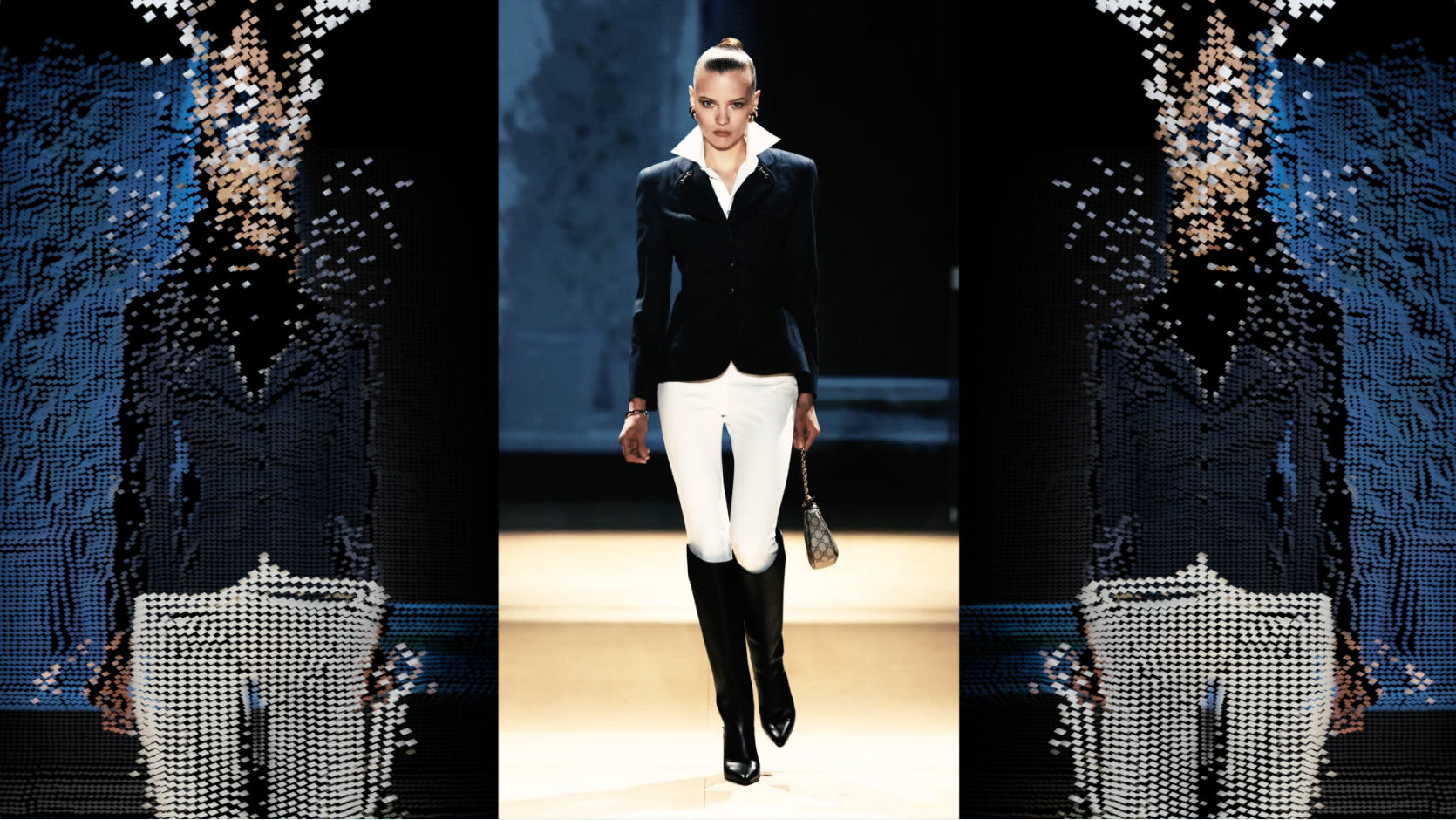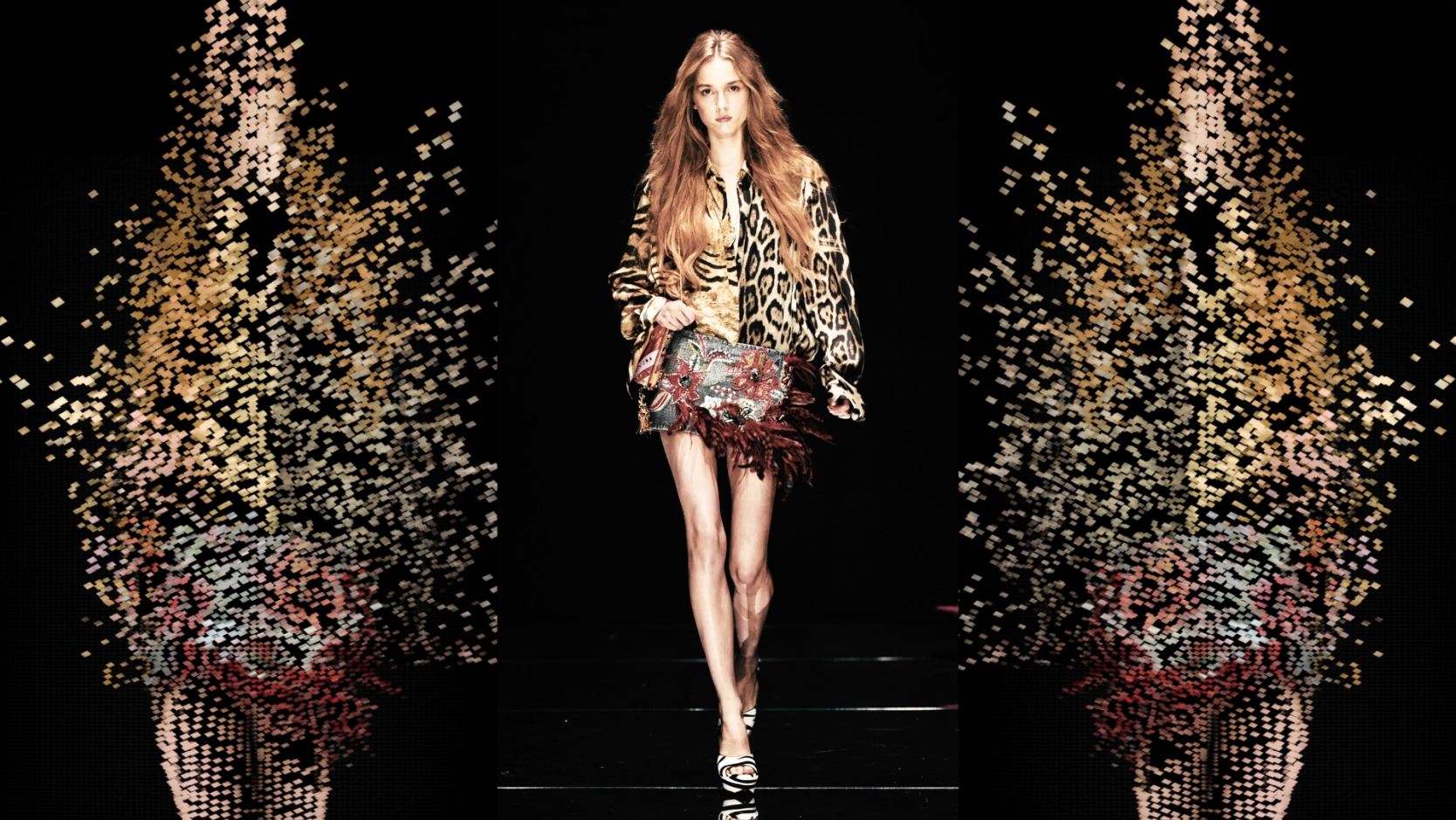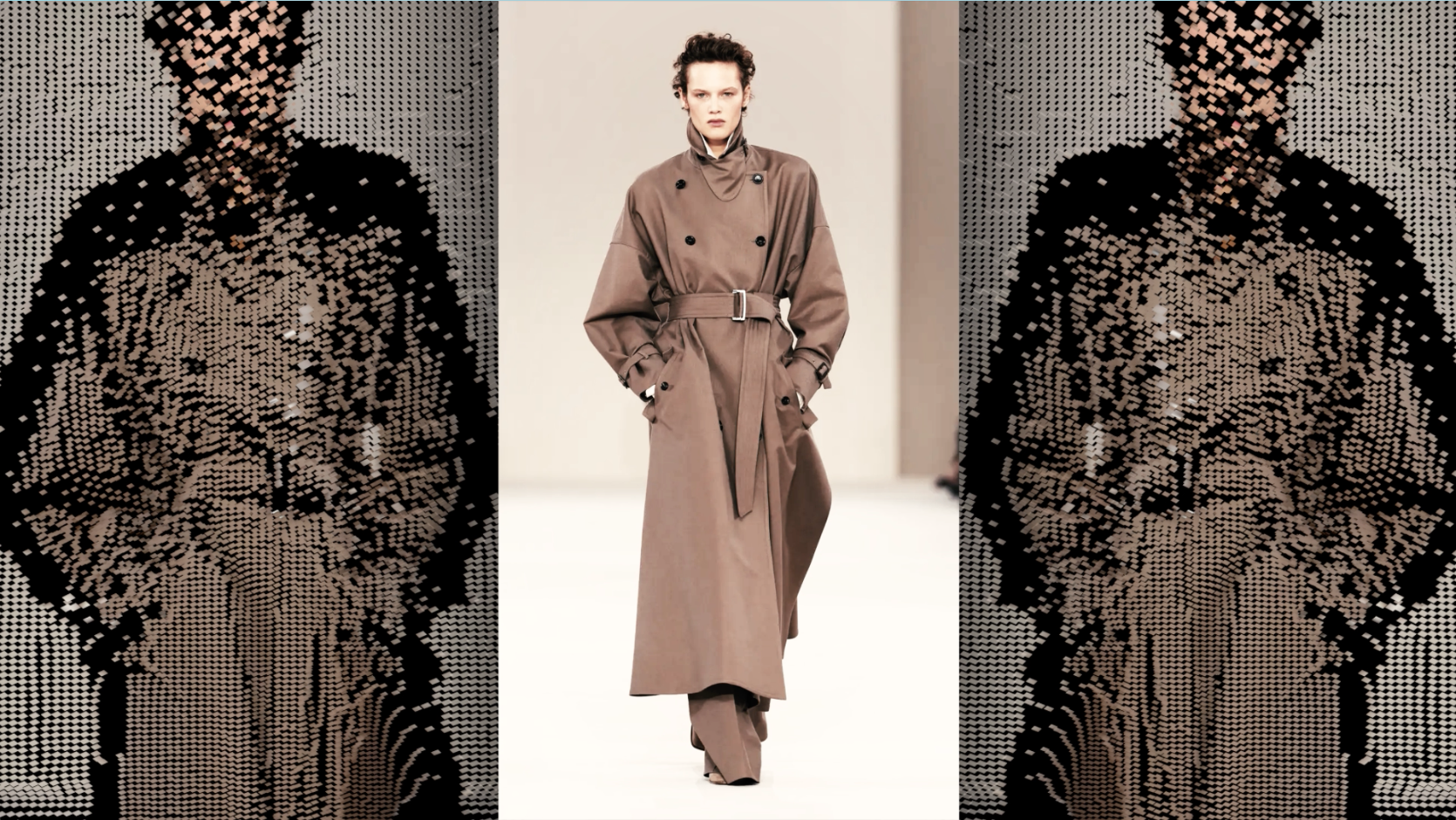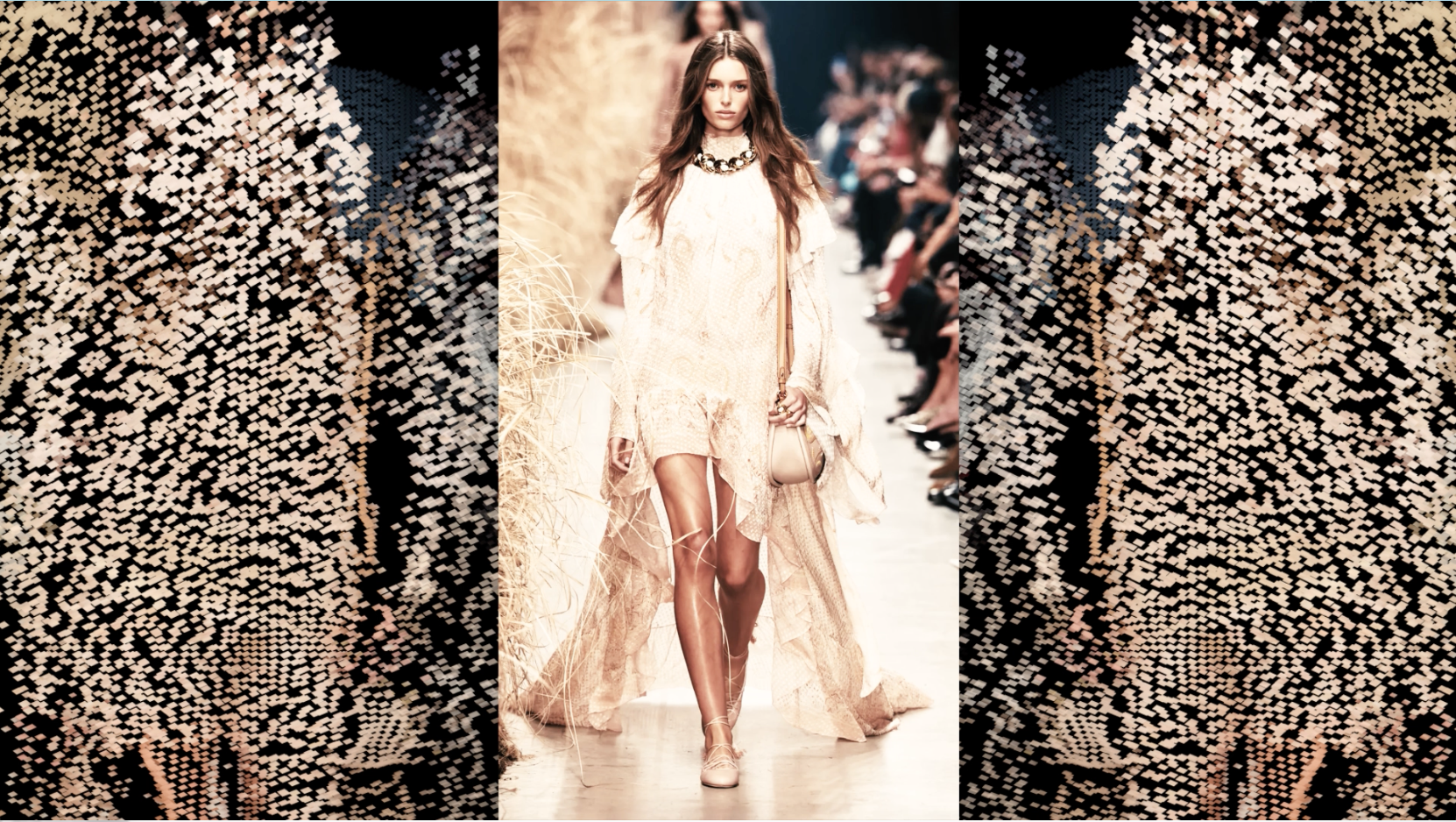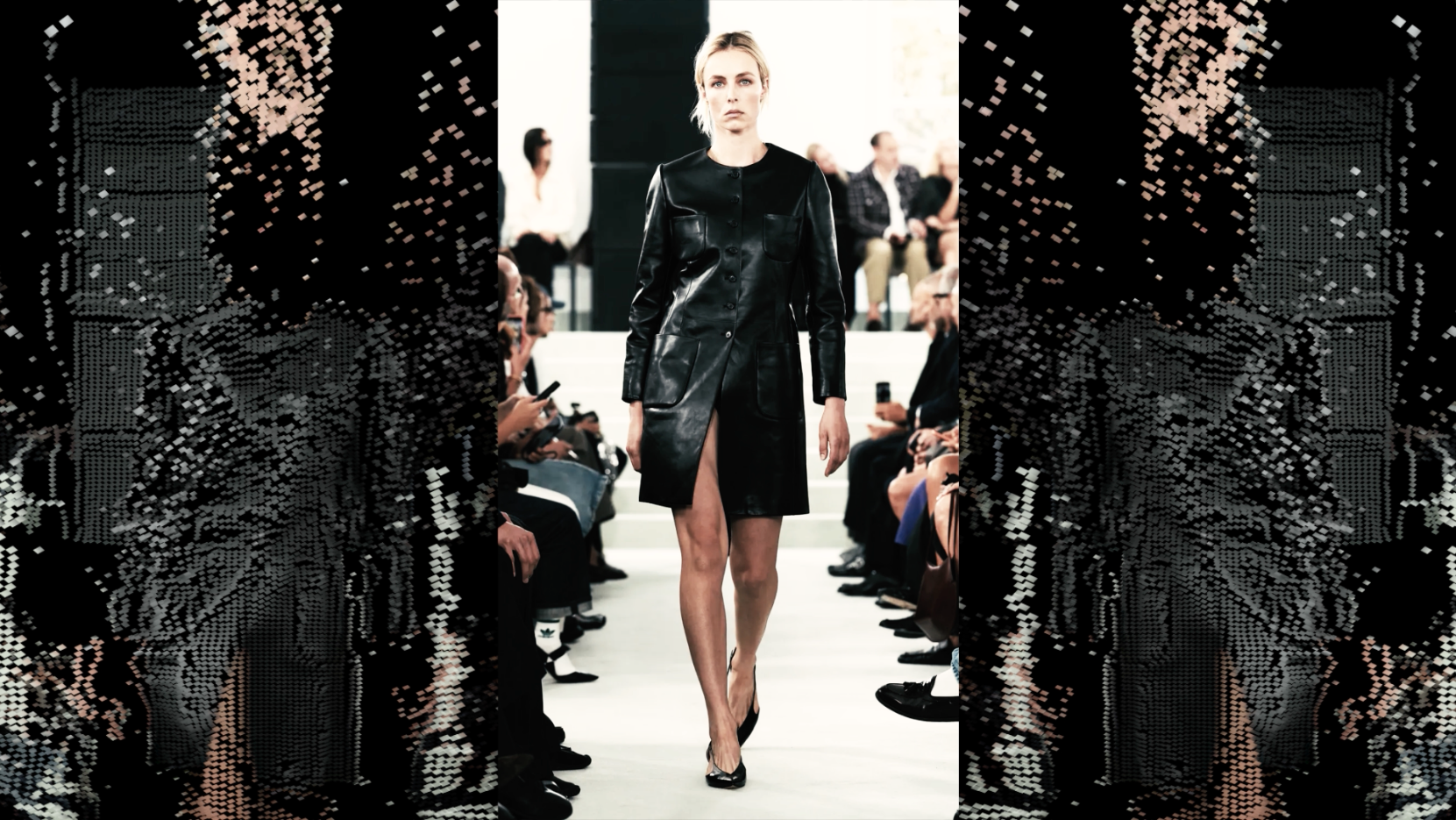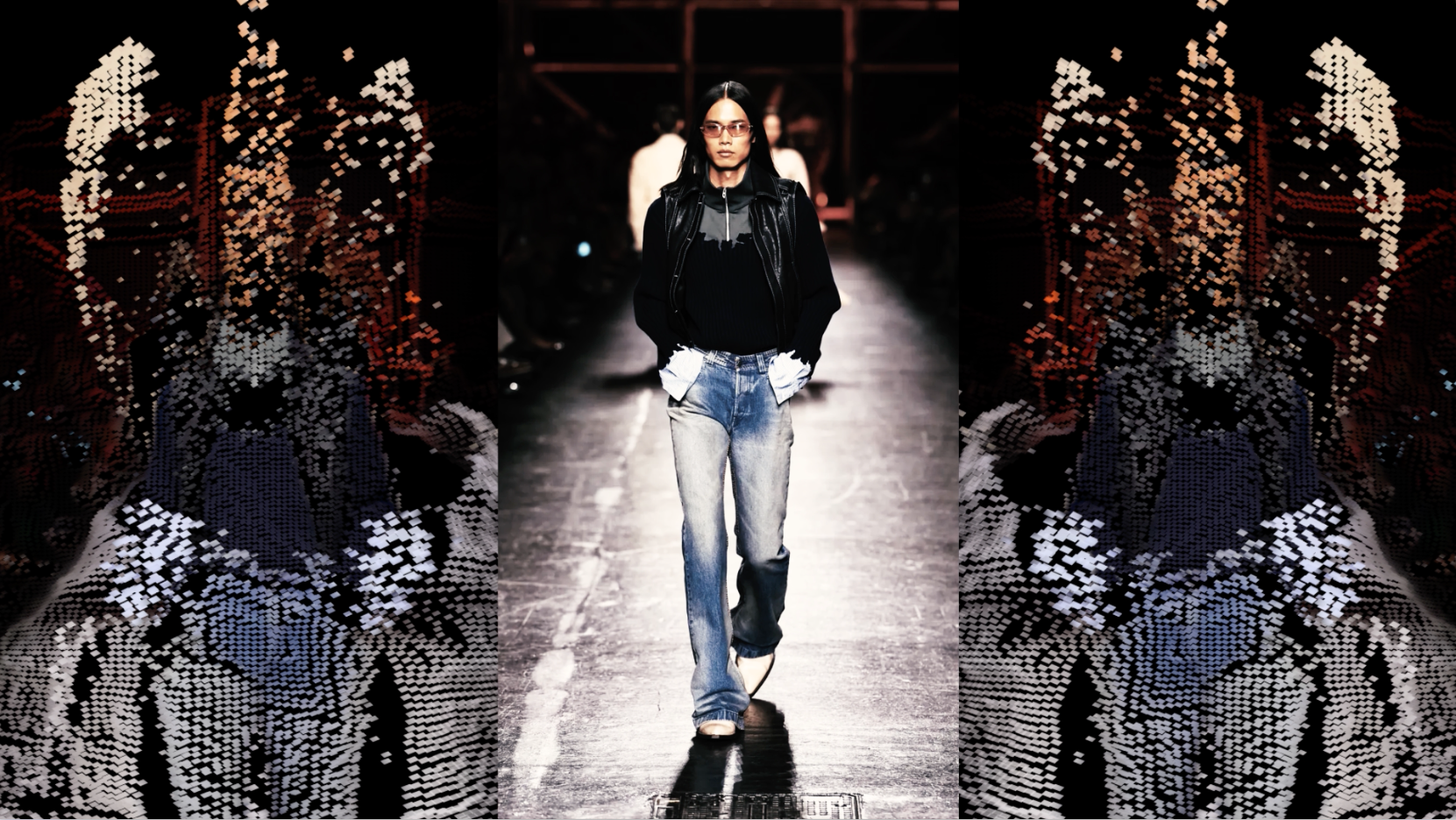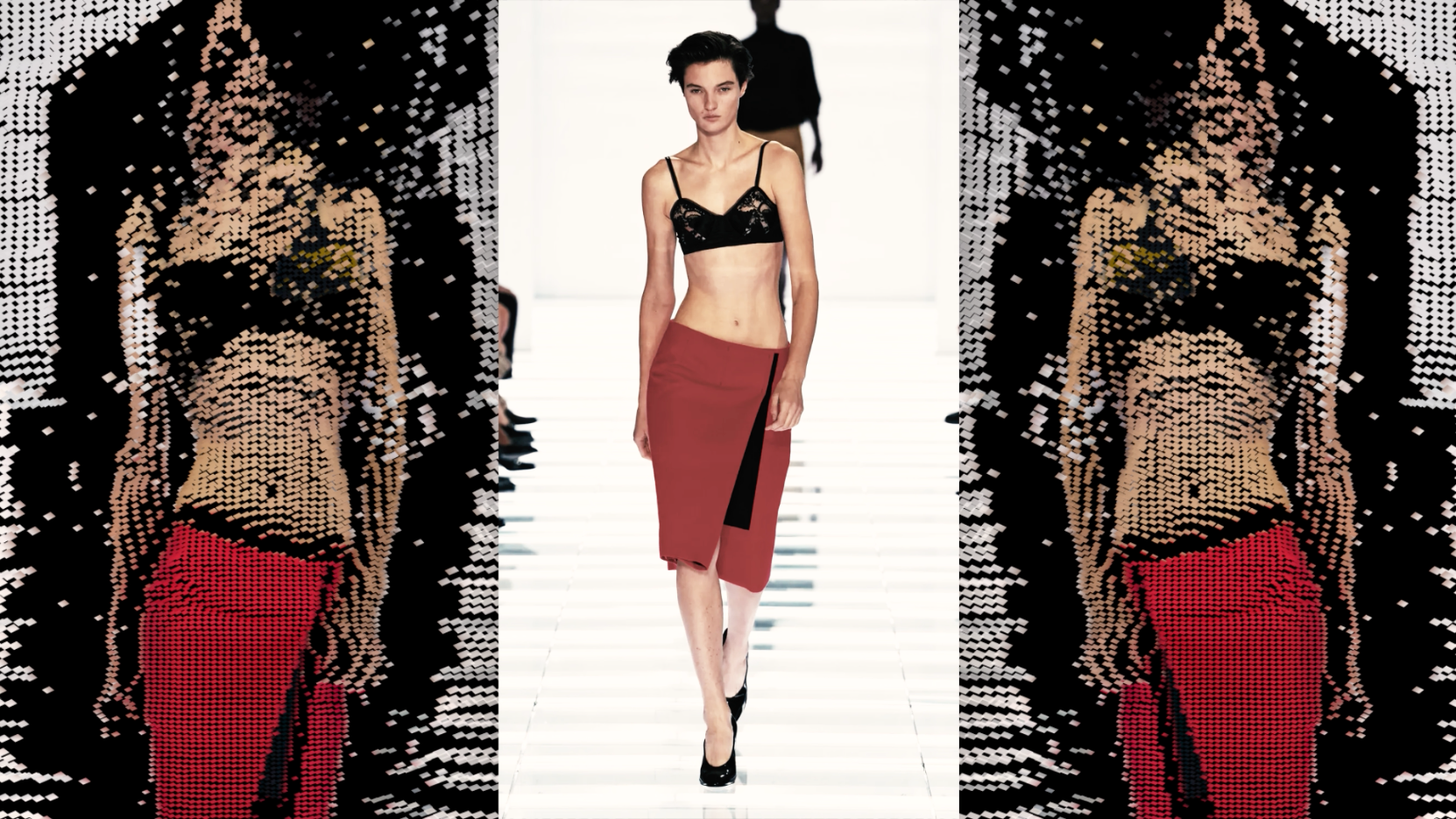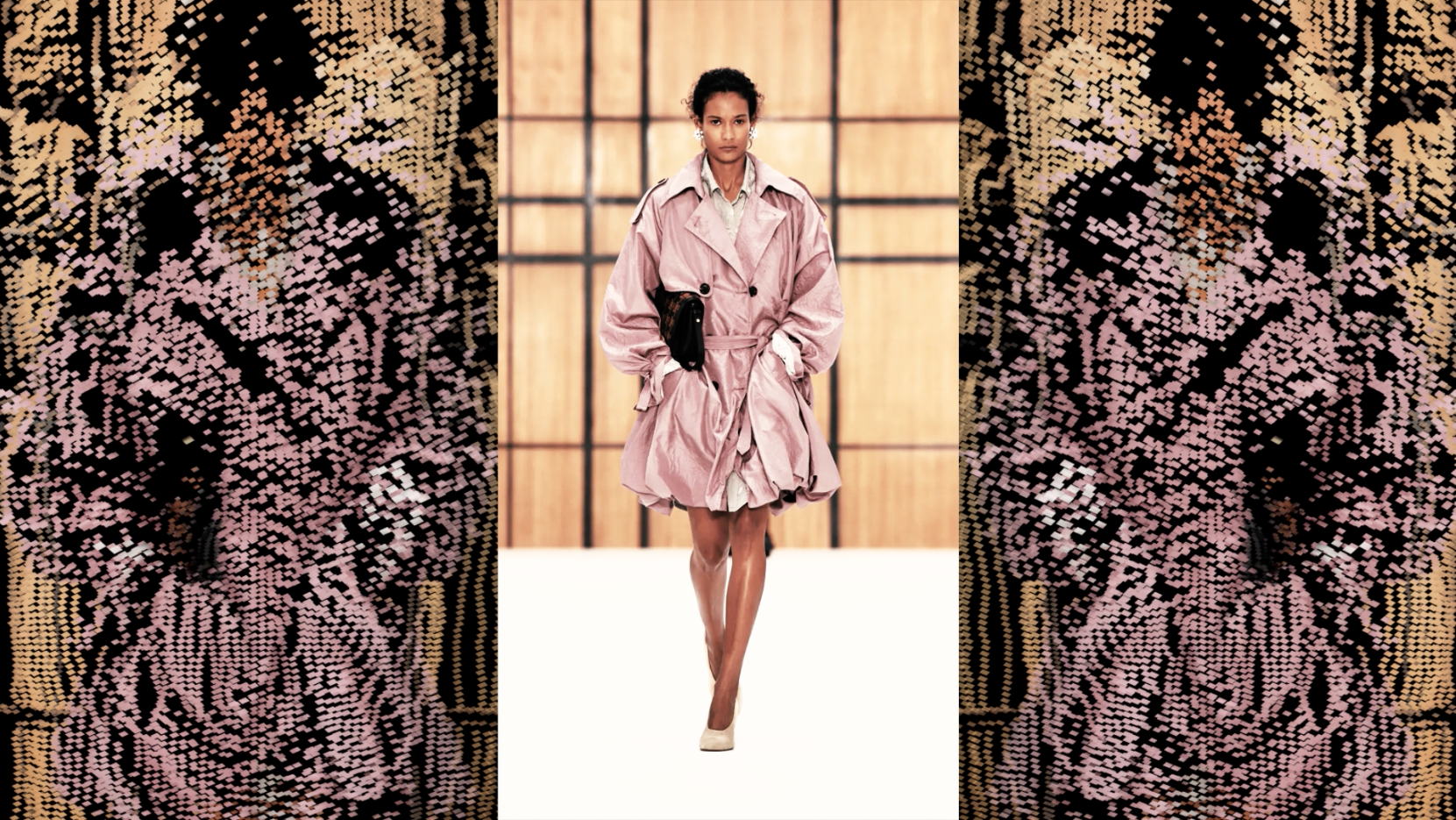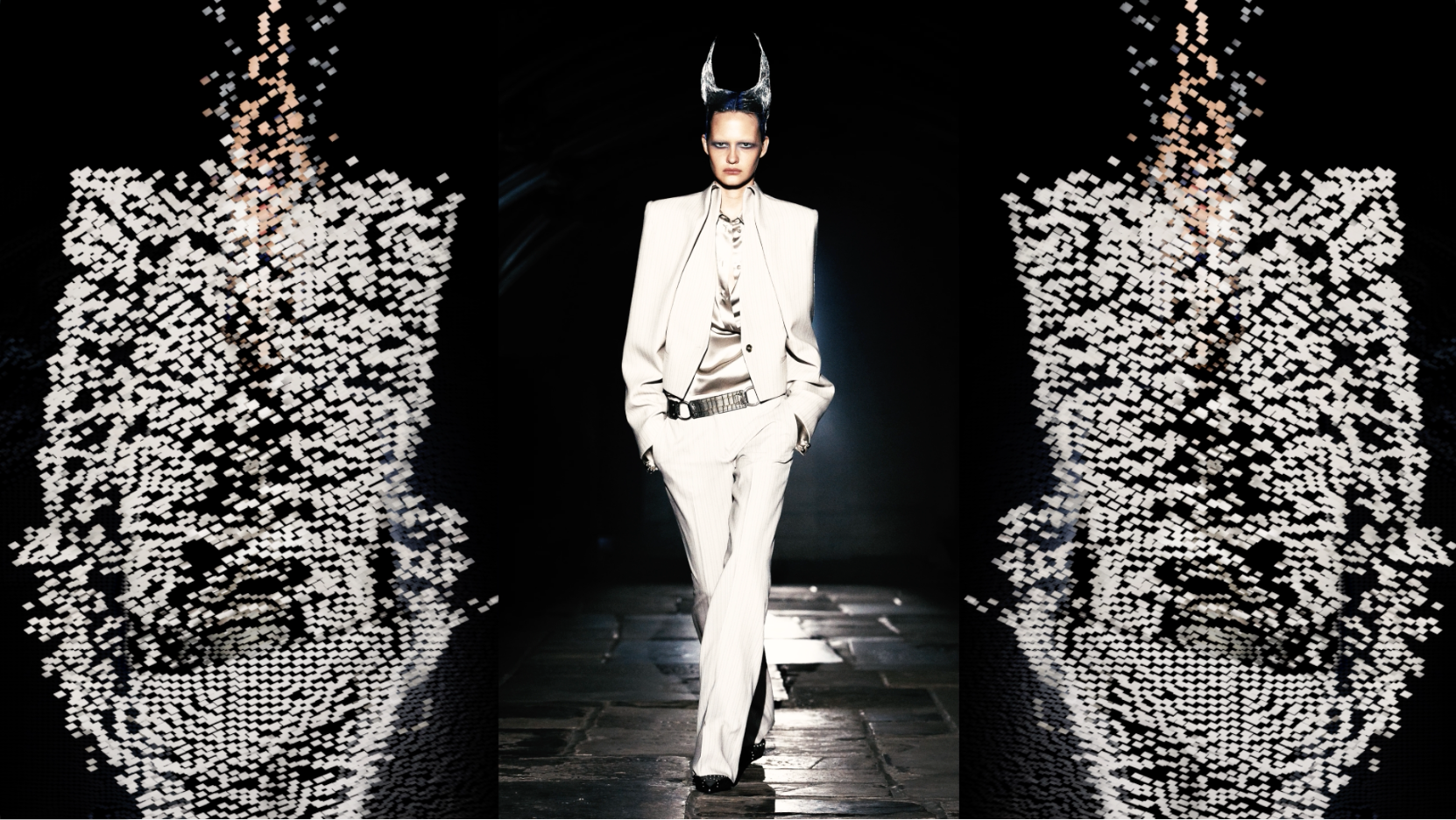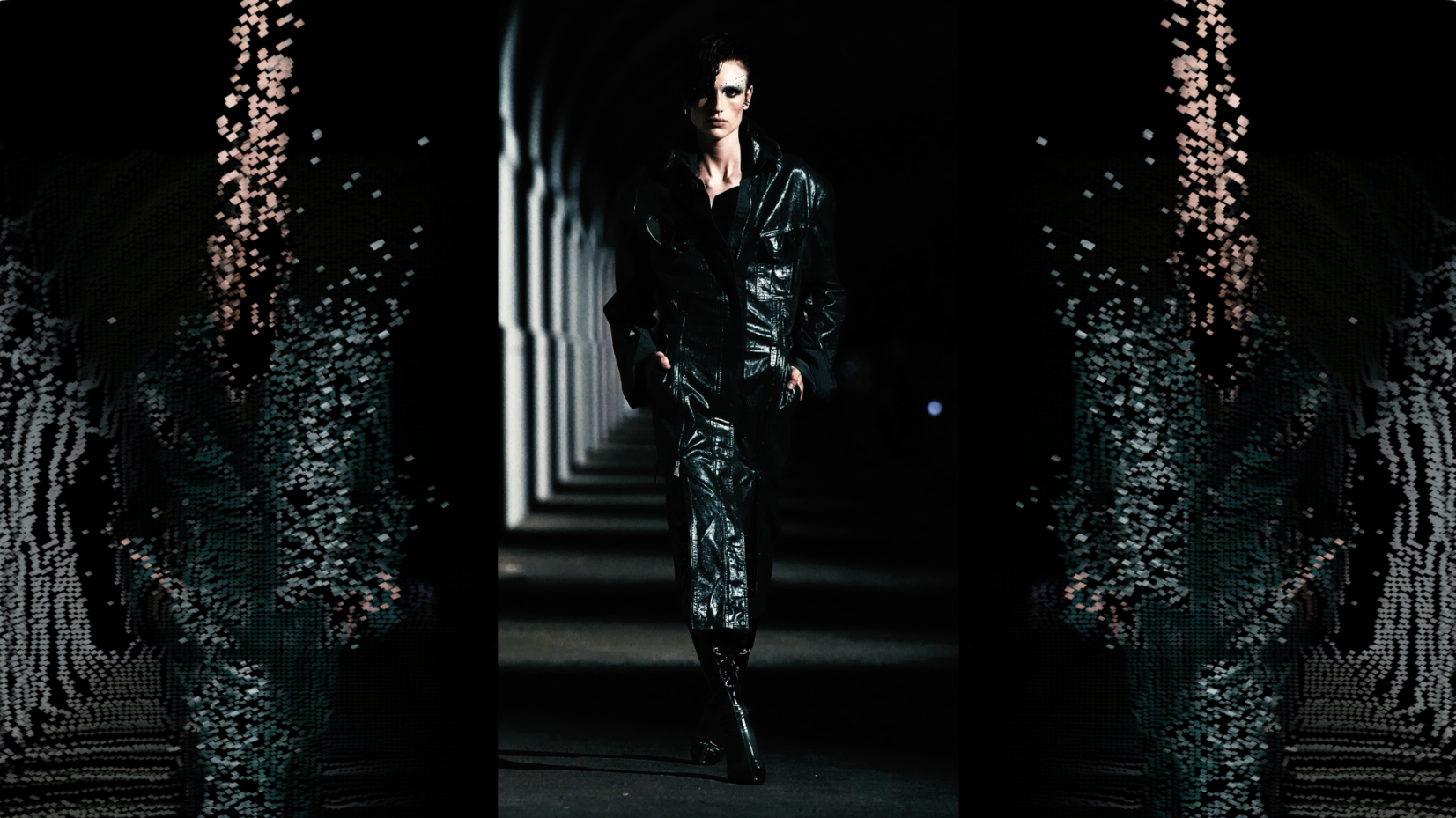
Christian Cowan – Spring 2027
*Christian Cowan Spring 2027 made a very convincing argument for getting dressed like your secrets are part of the outfit.* There is a particular kind of fashion show that makes you sit up.
There is something about this Tory Burch collection that made me want to stop thinking for a minute. Which, for me, is saying something. The clothes arrive against this deep teal room with a rusty red floor, and immediately everything feels slightly cinematic — coral, mustard, turquoise, burgundy, pale yellow, little flashes of gold, flowers everywhere, embroidery everywhere, things hanging off the body and around the body and occasionally looking like they might have been picked up on the way to the show. And then there is the belt. The belt is everywhere.
Kate Barton went on holiday. She packed the metal hardware, the sequins, a few flowers… and apparently decided everything should be pastel. A softer side of Kate Barton for SS27 — where engineered draping meets roses, satin, candy colours and the occasional poodle in a handbag. Is it still Kate Barton? Honestly… yes. Just having considerably more fun.
There is something very comforting about Tommy Hilfiger. The rugby shirt. The blazer. The pleated skirt. The loafers. The baseball cap. The slightly ridiculous idea that you might, at any moment, be expected to attend a yacht club meeting. You know the clothes. You probably owned some version of them. Or your brother did. Or your father. Or that boy at school who somehow looked annoyingly good in a rugby shirt while the rest of us looked like we were going to PE. And this collection doesn't really try to escape any of that. Instead, it makes everything a little too big.
There is something very Proenza Schouler about making clothes that look as though somebody has spent an unreasonable amount of time figuring out exactly how they should be put together. Which, obviously, is the point. Proenza has always been interested in construction — the stuff underneath the stuff, the way a garment twists, folds, hangs, wraps, gathers, cuts across the body. Not decoration for decoration's sake. At least that's the idea. So naturally, this collection gives us zebra. Not normal zebra, thankfully. That would be far too easy. This one is crumpled and abstracted and appears in a cloqué coat, a bias-cut dress, a crochet set and a wrap skirt, which is actually quite clever because the print keeps changing depending on how the fabric is being constructed. It's less animal print and more what happens if animal print gets a degree in architecture.
Diane von Furstenberg, colour, skin, platforms, and the slightly complicated business of being yourself. I have always liked the idea behind Diane von Furstenberg more than I have liked the idea of Diane von Furstenberg as a fashion institution.
There is a very particular moment when you realise you have been told how to be yourself by approximately 4,000 people you have never met, usually somewhere between TikTok, Instagram and a badly lit bathroom mirror. Find your aesthetic. Build a capsule wardrobe. Discover your personal style. Dress for your body. Find your colours. Know your style archetype.
Gucci describes Primavera as being about rebirth, renaissance and the transformative power of falling in love. And that could very easily have become unbearable. Fashion campaigns have a long and occasionally embarrassing history of trying to explain LOVE to us in capital letters.
Youssef Nabil has always made images that seem to have arrived from a film we have half-forgotten: glamorous, bruised, a little untimely. In To Dream Again at the Musée d’Orsay, that feeling becomes almost architectural. His hand-coloured photographs and videos are installed amid the museum’s Orientalist galleries—spaces already dense with projections of elsewhere, with Europe’s fantasies of the Arab world—and the encounter is as seductive as it is uneasy.
What if Alvin Ailey—all discipline and sensual control—and Luisa Casati—all decadence and theatrical excess—somehow ended up at the same dinner party? That was basically the question Fausto Puglisi posed this season at Roberto Cavalli. And honestly, only Puglisi would even think to ask it. He has always had a thing for America—he literally has the Hollywood sign tattooed on his forearm—so the tension between Italian hedonism and American pragmatism felt personal. Cavalli, historically, is about unapologetic sensuality. Puglisi kept that—but filtered it through something a little sharper. A little tougher. A little more “walk into the room and own it” instead of “float through in chiffon.” The opening black leather pantsuit set the tone. Boyish cut. Clean. Paired with a spangled bra top that still winked at Cavalli’s DNA. Then came an A-line tutu skirt—a callback to Puglisi’s early days—styled with pointy loafers. Loafers. On a Cavalli runway. That alone told you the fantasy had shifted. There was also a cocktail look barely more substantial than a leotard, its neckline nodding to Princess Diana’s revenge dress energy. Not literal—but that same sharp, post-breakup clarity.